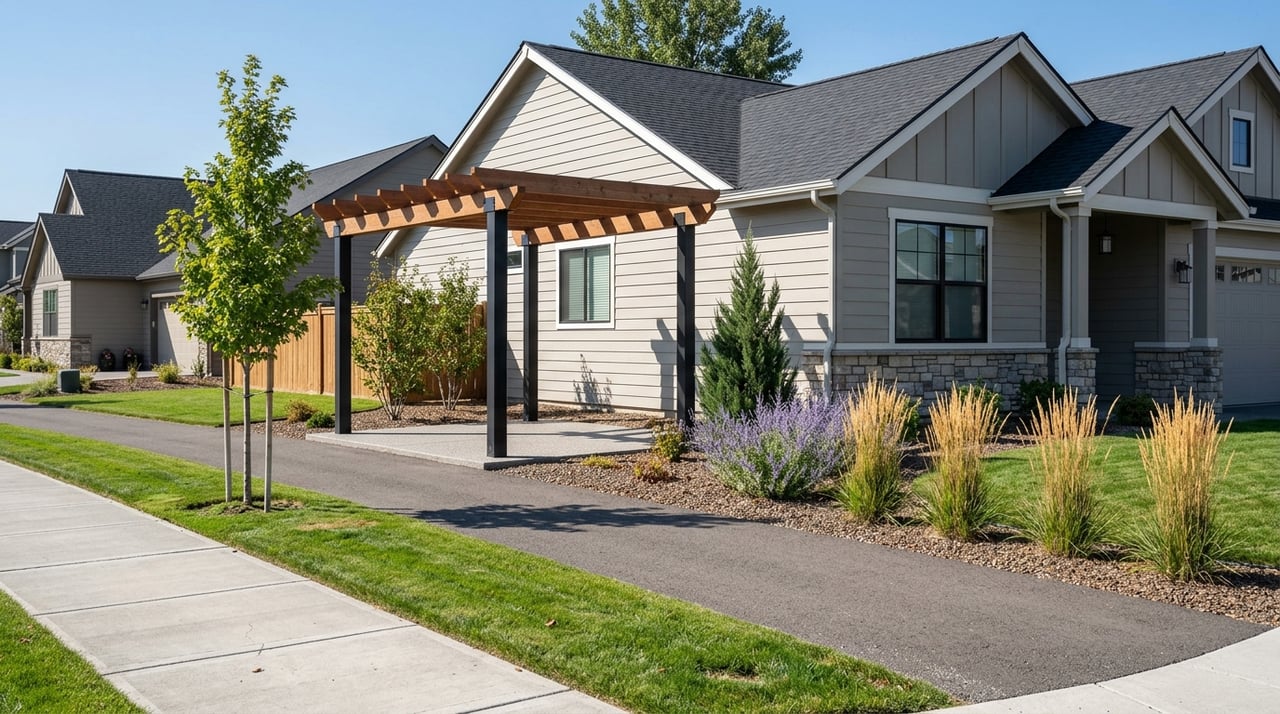
Wondering which of Herriman’s newer communities might fit your lifestyle best? If you are comparing homes in 84096, it helps to know that many of Herriman’s newest areas are not just subdivisions. They are larger, phased communities planned around housing, parks, trails, roads, and future commercial space. This guide will help you understand what to expect, what is already built, and what may still be coming. Let’s dive in.
What “newer master-planned” means in Herriman
In Herriman, newer master-planned areas are typically large projects designed as coordinated systems rather than stand-alone housing tracts. According to the Herriman General Plan, these areas are planned to combine housing, open space, amenities, shopping, services, and infrastructure over time.
That is especially true in the south hills, where Rosecrest, Panorama, and South Hills are part of the city’s newer growth story. In the northwest, Olympia is a 933-acre development with residential, commercial, and open-space components, as outlined in the city’s planning materials. The result is often a more connected feel, with roads, trails, utilities, and community features built into the broader plan.
Where newer communities are growing
Herriman’s newer master-planned growth is concentrated in a few key areas. The south hillside planning area is one of the biggest, with phased development that includes a mix of housing, connected trails, roads, and future parks, according to the city’s South Herriman development overview.
You will also see growth patterns in communities tied to names buyers often recognize, such as Joshua Tree, Mt. Rainier, Mountain Ridge, and Olympia. Each community can feel a little different, but many share a similar planning approach: a blend of home options, HOA-managed common areas, and access to parks or trail systems.
Home types you can expect
If you are hoping for variety, newer Herriman communities usually offer it. City planning documents for the south hillside area call for a mix of single-family homes, townhomes, and multi-family housing rather than one uniform product type.
That same pattern shows up in active communities. Builder information for projects such as Joshua Tree and Mt. Rainier highlights multiple product lines, which means you may find detached homes, attached townhomes, and in some cases condo-style options within the same broader area.
This matters because it gives you more flexibility as your needs change. You might be shopping for a lower-maintenance townhome now, while another buyer may be focused on a larger detached home in the same general corridor.
HOA fees and maintenance matter more here
One of the biggest differences in newer master-planned communities is how visible the HOA structure can be. In some Herriman communities, builder disclosures show layered fees and shared responsibilities rather than a single simple HOA line item.
For example, Mountain Ridge builder disclosures and Mt. Rainier materials show examples of community-level fees, primary HOA fees, and other line items tied to utilities or internet. Joshua Tree also notes HOA-maintained landscaping for townhome products.
That does not automatically mean a community is more expensive or less appealing. It usually means you should look closely at what is included. In some cases, HOA coverage may include common-area maintenance, snow removal, landscaping, exterior maintenance, or exterior insurance for condo-style properties.
Questions to ask about HOA structure
Before you buy in a newer Herriman community, it helps to ask:
- What does the monthly HOA fee include?
- Is there more than one HOA or master association?
- Who handles landscaping and snow removal?
- Are exterior maintenance or insurance included for my home type?
- Are there separate utility or internet-related charges?
Those details can shape your monthly budget just as much as the mortgage payment.
Amenities are a major draw
Many buyers are drawn to newer Herriman communities because amenities are often part of the original plan. That can include parks, trails, play areas, clubhouses, pools, or pickleball courts, depending on the specific development. Builder materials for Mt. Rainier, for example, point to this amenity-rich model.
Herriman as a city also places a strong emphasis on outdoor access. The city reports more than 60 miles of trails, including over 37 miles of primitive trails and more than 23 miles of paved trails and walkways.
That larger trail network helps explain why newer neighborhoods often feel tied to recreation in a meaningful way. If trail access is high on your list, Herriman gives you a lot to compare.
Juniper Canyon is one of the clearest examples
The city’s Juniper Canyon Recreation Area shows how newer planning and recreation often work together in Herriman. This 72-acre area is intended to connect residential, commercial, and educational areas to the hills trail system.
Phase 1 already includes a bike playground, pump track, paved trail, restrooms, picnic facilities, and other trailhead features. The city also states that phase 2 added 3,500 feet of asphalt trail connections in 2024, and a west trailhead is anticipated in fall 2026.
Other recreation anchors nearby
Newer Herriman communities also benefit from larger city amenities nearby. The city’s Blackridge Reservoir includes a beach, playground, trailhead, paved trail, benches, and pavilions.
Another newer public amenity is Mountain Ridge Park, which opened in 2025 with an all-abilities playground, pavilion, restrooms, parking, and a walking trail. When you compare communities, it is worth looking not just at subdivision amenities, but also at the public spaces around them.
Some community features are still in phases
This is one of the most important things to understand before you buy new or newer in Herriman: not every planned feature is finished yet. Some parks, roads, and trail links are already complete, while others are still on the city’s future timeline.
For example, the south hillside plan says the Juniper Crest Road extension is expected in 2026. It also notes that Panorama Park is targeted for completion by the end of 2028, along with trail connections that will tie into existing systems.
That does not mean you should avoid these areas. It simply means you should separate today’s amenities from future planned amenities so you can make a decision based on your real timeline.
Shopping and services are getting easier to reach
One common concern about newer growth areas is convenience. In Herriman, shopping and daily services are increasingly concentrated along Mountain View Corridor, 13400 South, and Herriman Main Street.
According to the city’s shop local overview, Herriman has more than 200 brick-and-mortar businesses across about 20 commercial areas. Current examples include Lee’s Marketplace at Academy Village, while The Commons at Herriman Towne Center is under construction with more than 200,000 square feet of retail and restaurant space and an opening target as early as 2027.
Builder materials for Joshua Tree and Mt. Rainier also emphasize proximity to Mountain View Village. That reinforces a key point for buyers: many newer communities are designed around access to larger retail nodes and major corridors, not total separation from them.
Transit and commuting are corridor-based
If you rely on transit, the better question is not whether every newer neighborhood is directly walkable to a stop. The better question is how close the community sits to Herriman’s main transit corridors.
UTA’s Route 126 South Valley Regional service plan connects Daybreak Parkway TRAX and Draper Town Center TRAX, with stops through Herriman corridors such as Herriman Main Street, Rosecrest Road, 13400 South, Mountain View Corridor, and 12600 South. The route currently runs every 60 minutes on weekdays from 6 a.m. to 9 p.m., with service planned to increase to every 30 minutes in 2028.
UTA’s South Valley on-demand zone also covers parts of Herriman, which can help with first- and last-mile connections. For many buyers, that means transit access is improving, but still tied most closely to the major streets rather than every interior neighborhood.
Road access will keep evolving
Road access is a major part of the story in newer Herriman communities. Many neighborhoods are planned around major travel corridors, especially Mountain View Corridor.
UDOT says Mountain View Corridor is being converted into a freeway in phases. The next segment between Porter Rockwell Boulevard in Herriman and Old Bingham Highway in West Jordan is expected to begin construction in 2027.
For buyers, this means access patterns may continue to improve over time, but construction and long-range transportation changes are part of the reality of buying in a growing area.
How to compare Herriman communities wisely
When you tour newer master-planned communities in Herriman, try to compare more than just the house itself. A smart comparison usually includes the home type, monthly fee structure, amenity access, road connections, and what is already finished versus still planned.
Here is a simple checklist to keep in mind:
- Compare detached homes, townhomes, and condo-style options separately
- Review every HOA fee and what each one covers
- Ask which amenities are complete today
- Confirm which parks, roads, or trails are future phases
- Check proximity to retail corridors like 13400 South and Mountain View Corridor
- Look at access to Route 126 or on-demand transit if commuting matters
That kind of side-by-side approach can save you from surprises later.
Why this matters for buyers and sellers
If you are a buyer, understanding Herriman’s newer communities can help you choose a neighborhood that fits your budget, maintenance preferences, and daily routine. Newer does not always mean identical, and small differences in HOA scope, trail access, or future construction can have a big impact on how a community feels.
If you are a seller in one of these areas, knowing how your community fits into Herriman’s broader growth story can help position your home more clearly. Buyers often respond well to practical information about amenities, access, maintenance, and the larger planning vision around the neighborhood.
If you want help comparing newer Herriman communities or preparing a home for sale in 84096, Steve Schoonover can help you evaluate the details, understand local market positioning, and make a confident next move.
FAQs
What are newer master-planned communities in Herriman?
- In Herriman, newer master-planned communities are larger, phased developments that combine housing with amenities, trails, roads, open space, and in some cases commercial areas, rather than functioning as isolated subdivisions.
What home types are common in newer Herriman communities?
- Newer Herriman communities often include a mix of single-family homes, townhomes, and sometimes condos or other multi-family options, depending on the project.
How do HOA fees work in newer Herriman neighborhoods?
- HOA structures in newer Herriman neighborhoods can be more detailed than in older areas, with some communities having multiple fee lines for common-area maintenance, landscaping, snow removal, exterior upkeep, or other shared services.
Are amenities finished in all newer Herriman communities?
- No. Some amenities are already complete, while others are being built in phases, so it is important to confirm what exists today versus what is planned for the future.
How much trail access do newer Herriman communities have?
- Many newer Herriman communities benefit from the city’s broader trail system, and Herriman reports more than 60 miles of trails, including paved walkways and primitive trails.
Is shopping convenient from newer Herriman neighborhoods?
- In many cases, yes. Shopping and services are increasingly centered along Mountain View Corridor, 13400 South, and Herriman Main Street, with additional retail development still underway.
How does transit work in newer Herriman communities?
- Transit in Herriman is mainly corridor-based, with UTA Route 126 serving key streets and UTA’s South Valley on-demand service covering parts of the area, so access varies by neighborhood location.