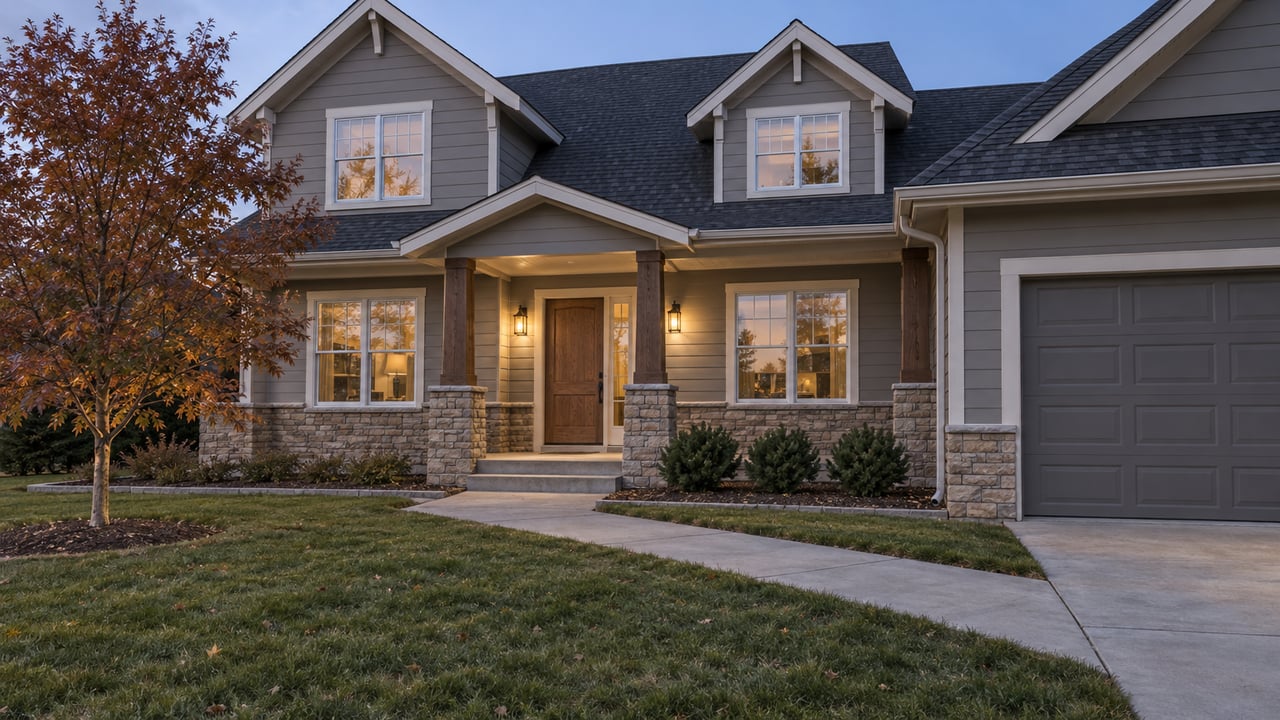
A Herriman Journal report quoted Herriman City Councilman Jared Henderson describing a financing tool created for developers by the Utah Legislature in 2019: "This isn't the fox guarding the hen house. This is locking the fox inside and walking away." Herriman City has since approved the tool for two of its newest subdivisions. If you're touring new construction in south Herriman right now, it's worth confirming whether the subdivision sits inside one of them.
The tool is called a Public Infrastructure District, or PID.
What a Public Infrastructure District Actually Is
Utah's SB 228, sponsored by then-Sen. Dan McCay of Riverton, created a way for landowners to form a special taxing district and use its authority to fund big infrastructure costs like roads and water lines. The approval process depends on when the district is formed. Formation requires unanimous approval from the landowners inside the proposed district, but if the district is set up before a single home is sold, the only landowner who has to approve it is the developer. The same is true of the initial board of trustees. The city appoints it at first, then it's filled from landowners, which again means the developer until enough homes have closed to change that math.
Once formed, a PID can levy property tax of up to .015 per dollar of taxable value, roughly 1.5 percent.
Herriman approved two of these in December 2024, tied to updated development agreements for Panorama and Soleil Hills (sometimes referenced as South Hills) in the South Herriman growth area. The vote was 5-0.
A PID is not the same thing as an HOA. HOA dues are a private, contractual charge for shared amenities and upkeep. A PID's levy is a public tax, and the district is initially governed by people you never had a chance to vote for.
What the Extra Line Actually Pays For
The reason south Herriman needed this tool in the first place is written into the entitlement agreements the city approved. Under the updated South Herriman Development plan, roads, water lines, and other infrastructure are built before homes go up, using a public infrastructure district's bonding capacity to front the cost. It's a real trade. Buyers moving into Panorama or Soleil Hills aren't waiting years for pavement to catch up to rooftops the way earlier phases of Herriman's growth sometimes did.
Some of that infrastructure is already visible. The Juniper Crest Road extension, which connects to Mountain View Corridor and Real Vista Drive, is expected to be completed in 2026, and the Panorama developer has separately committed to funding landscaping along that stretch of Juniper Crest Road by the end of 2026. A neighborhood park in the development area isn't expected until 2028. The specific intersection of Juniper Crest Road and Mountain View Corridor was targeted by the city to open by mid-September 2026.
That road grid also sits near a larger, separate project. The Utah Department of Transportation is planning to convert Mountain View Corridor from a divided highway into a full freeway between Porter Rockwell Boulevard in Herriman and Old Bingham Highway in West Jordan, adding general purpose lanes, 25 new bridges, and new ramps. UDOT held a public hearing on the environmental reevaluation in November 2025 and, as of its August 2026 construction updates, still lists 2027 as the start date for that phase. Herriman's own project tracker lists late 2026 for the same segment, so the two sources don't quite agree on the calendar, but they agree on the outcome: this corridor is getting built out in the near term regardless of which agency's timeline lands first.
For South Herriman's local roads, water lines, and other improvements, a PID is one way to fund the work up front rather than wait on city budgets.
What It Costs, Set Next to a Standard Herriman Tax Bill
Herriman's own property tax page explains that a typical bill in the city already stacks 16 separate taxing entities, including the Jordan School District, Salt Lake County, Herriman City, the city's fire and safety service areas, the Jordan Valley and Central Utah Water Conservancy Districts, and the Jordan Basin Improvement District.
The scale is worth putting side by side. In the county's 2025 certified rate table, the three Herriman-controlled entities on a standard bill, Herriman City, the Herriman City Fire Service Area, and the Herriman City Safety Enforcement Area, combine for about 0.29 percent of taxable value. A PID's statutory ceiling of up to 1.5 percent is more than five times that combined total, on its own.
For context on how small normal annual adjustments run, Herriman's fire and safety service areas were proposing increases of about 5 percent and 2.4 percent respectively for the coming year, which the city itself translated to roughly $25.70 and $11.62 more per year on a $640,000 home. A PID working toward its statutory ceiling isn't operating in that range. It's a materially larger number, and the specific levy for any given address inside Panorama or Soleil Hills isn't something a buyer should assume from the ceiling alone. It's something to request directly.
A Market Where the Extra Line Is More Likely to Get Noticed
Herriman's broader housing data right now doesn't tell one clean story, and that's useful to sit with rather than smooth over. Looking at homes sold across the city in the three months ending in May 2026, the median sale price came in at $587,000, down close to 3.9 percent from the same period a year earlier, with homes going under contract in a median of 48 days. Meanwhile, closings in the 84096 zip code in August 2026 posted a median of $633,900, but took a median of 112 days to sell, up sharply from 81 days the year before.
Those two figures disagree because they're measuring different slices of the same city over different windows, and that disagreement is itself a useful signal. A single "Herriman median" can't tell you whether you're pricing a resale in an established village like Rosecrest, Mountain Ridge, Blackridge, or Hidden Oaks against new construction in a PID-financed subdivision further south. Those are different products with different cost structures, and treating them as one number flattens a distinction that matters at the closing table.
The lengthening days-on-market points the same direction. Buyers appear to be taking longer to commit than they were a year ago, which means there's more time in a typical transaction for a question about an unfamiliar tax line to surface, and more room for a buyer to ask it before writing an offer rather than discovering it in escrow.
What To Check Before You Write an Offer
- Ask whether the subdivision sits inside a named public infrastructure district, and get the district's name specifically, such as the Panorama or Soleil Hills service district.
- Request the district's current levy and the assessed value it's calculated against, separate from any advertised HOA dues.
- Ask how many homes in the district have closed so far and who currently sits on the board of trustees.
- Ask about the district when reviewing the preliminary title report and HOA covenant documents.
- Add city tax, PID levy, and HOA dues together and compare that total against a resale home in an established Herriman neighborhood before deciding whether the newer road grid is worth the difference.
Questions Worth Settling Before Closing
Does every new home in Herriman sit inside a PID? No. As of the city's most recent approvals, this applies to specific south Herriman entitlement areas, currently Panorama and Soleil Hills.
Is a PID the same as an HOA fee? No. An HOA is a private contract for shared amenities and maintenance. A PID is a public tax.
If you're comparing new construction in Panorama or Soleil Hills against a resale a few miles north, it's worth having someone walk the disclosure package and preliminary title report with you before you sign anything. Utah Homes by Steve will go through that paperwork line by line so you know exactly what you're carrying, not just what the model home looks like.
This article is general information, not legal, tax or financial advice. Consult a qualified professional about your situation.